
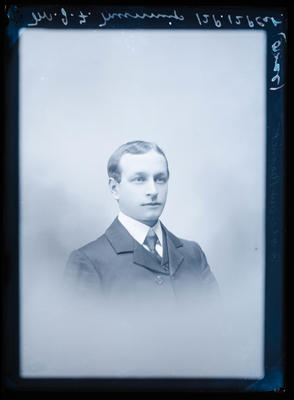
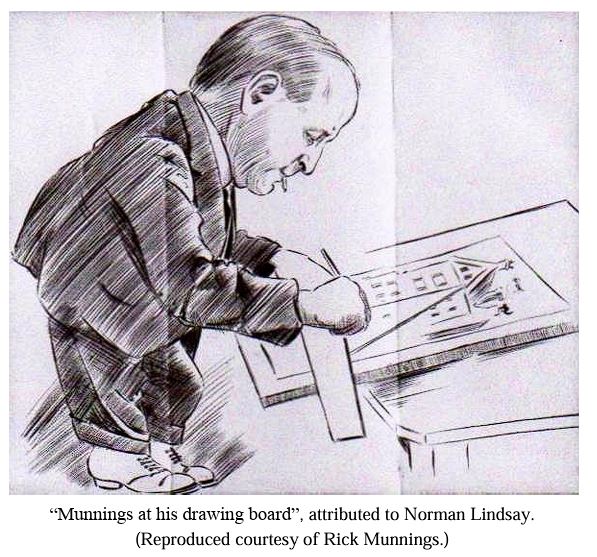
In the early years of the twentieth century, a wave of public civic architecture reshaped the built environment across New Zealand and the broader British Empire. Among the architects contributing to this era was Joseph Fearis Munnings (1879–1937), a New Zealand-born designer whose career took him from colonial Christchurch to India and later to Australia. While his legacy is better documented for major works overseas, his probable involvement in the design of Amuri Hospital, a pivotal rural healthcare institution in North Canterbury, reflects both the reach and complexity of his practice.
Early Life and Professional Formation
Joseph Fearis Munnings was born in New Zealand in 1879 and trained initially in Christchurch under influential architects, including Samuel Hurst Seager. His early development was rooted in British architectural tradition, a foundation strengthened by further study in England, where he passed the final examinations for associateship of the Royal Institute of British Architects. From there he embarked upon a cosmopolitan career that included colonial appointments and substantial institutional projects.
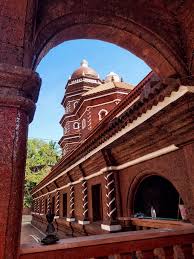
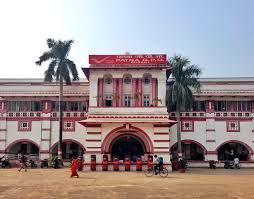
Though celebrated for his administrative and design roles in British India—notably as consulting architect to the provinces of Bihar and Orissa, where he contributed to the planning of public buildings and civic residences in Patna—Munnings also maintained ties with architectural practice in Australasia.
Amuri Hospital: A Rural New Zealand Landmark
Amuri Hospital, located in Rotherham, North Canterbury, was constructed in the early 1920s, completing in 1922 amid a post-World War I thrust to expand rural medical infrastructure. Designed in a robust reinforced concrete form, it features 4-inch double concrete exterior walls, a substantial achievement in material and structural durability for the period. It was opened with Miss C. Blackie serving as the first matron.
The hospital served a broad agricultural hinterland, providing maternity care, accident treatment, convalescence, and general medical services at a time when transportation and communications were limited. From its opening through to closure in the 1960s, the facility acted as a vital local institution.
Munnings’ Architectural Connection
Direct documentation confirming Munnings as the architect of Amuri Hospital is limited, but architectural tender notices from the period suggest his involvement. The Architect of Empire thesis, the most comprehensive study of Munnings’s career, notes that plans for Amuri Hospital “are not in Munnings’ hand” but acknowledges that the tender documents contain options reflective of his broader design era, with both timber and concrete schemes produced and that the executed concrete design aligns with Munnings’s professional circle and timing.
While the definitive attribution remains a subject for further archival research, the stylistic and technical characteristics of the building align with the practical and material sensibilities seen in other projects linked to architects of Munnings’s generation in New Zealand. That includes the period’s emphasis on durable, hygienic materials and structural clarity, particularly for health and institutional buildings.
Architectural Significance and Legacy
Amuri Hospital stands as more than a utilitarian facility; its solid concrete construction and thoughtful planning illustrate early twentieth-century efforts to deliver quality healthcare facilities to rural communities. The hospital continues to attract interest as a historical building, with recent efforts by new owners to restore and reinterpret its spaces for contemporary use while preserving vestiges of its medical past.
Munnings himself remains a figure whose work crosses continents—from colonial capital planning in India to domestic architectural practice in Australia—yet the possible architectural imprint at Amuri Hospital underscores how New Zealand’s rural environments were shaped by practitioners grounded in both local context and global professional currents.
Conclusion
Joseph Fearis Munnings occupies a unique position in architectural history: a New Zealand-born architect whose career spanned colonial India, Australia, and the Australasian architectural milieu. Although the direct authorship of Amuri Hospital’s design cannot be categorically confirmed, evidence places his professional influence in the right period and context for involvement. The hospital’s design and enduring presence reflect both the practical imperatives of rural public architecture in the early 1920s and the broader narrative of architects who bridged imperial and regional worlds.
 Amuri Manor – Boutique Country Accommodation | Historic 1922 Hospital, North Canterbury